
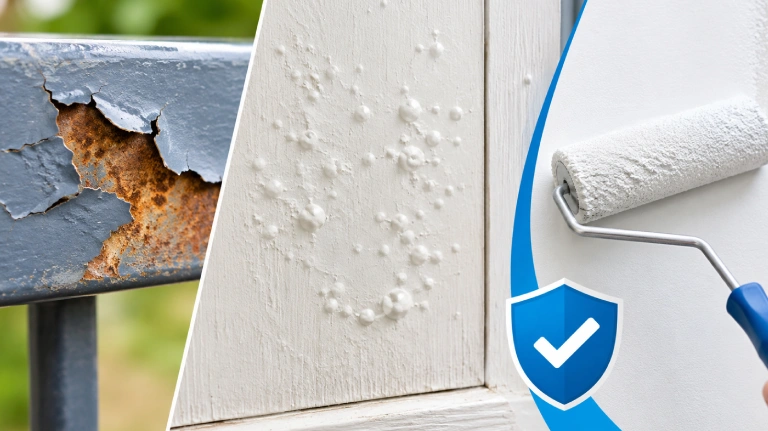
Paint peels or bubbles when something gets trapped under the film or the film never bonds properly. The usual culprits are moisture, dirt, oil, rust, salts, the wrong primer, thick coats and painting in bad weather. Prevent it by preparing the surface, using the right primer and following the data sheet for thickness, drying and conditions.
Most failures that reach us trace back to preparation and conditions, not the topcoat. A dependable supplier among the paint manufacturers in India will recommend a matched primer and topcoat system for your surface. Below is why paint peels or bubbles, and what to do about it.
Bubbling vs Peeling: Different Problems
- Bubbling or blistering: a pocket of moisture, solvent, gas or salt solution pushes the film up.
- Peeling or flaking: the film loses adhesion and lifts away from the surface.
Knowing which one you have points to the cause. Bubbles suggest trapped moisture or solvent. Peeling suggests poor bonding, contamination or a bad primer.
Why Paint Fails on Metal
Contamination
Oil, grease, dust, old coating and loose rust prevent adhesion. Painting over them looks fine at first, then lifts.
Rust and Mill Scale
Painting over rust lets corrosion continue under the film. The rust expands and pushes the paint off.
Soluble Salts
Chlorides and other salts left on the surface draw moisture through the film, forming blisters. This is common near coasts and industrial sites.
Wrong or Missing Primer
Bare steel, galvanised steel and aluminium each need a suitable primer. Ordinary paint on galvanised or aluminium surfaces often peels.
Moisture and Dew Point
Painting when the surface is damp, or close to dew point, traps moisture. A commonly used rule of thumb is to keep the surface at least 3°C above dew point.
Excessive Thickness or Short Recoat Times
Thick coats trap solvent, which later forms bubbles or pinholes.
Why Paint Fails on Wood
Moisture in the Wood
The USDA Forest Service’s guide to finishing wood exteriors identifies moisture as a leading cause of paint blistering and peeling. Water can enter through end grain, joints, cracks, the back face or leaks, then push the film off from behind.
Painting Damp or Unprimed Wood
Wet timber, fresh boards and unsealed surfaces cause poor bonding and blistering.
Old, Glossy or Flaking Paint
Painting over loose paint or unsanded gloss gives a weak base.
Resin, Oil and Tannin Bleed
Knots and oily woods can stain or lift paint unless sealed with a suitable primer.
Wrong Product for the Job
Interior paint outdoors, or an incompatible coat over an old finish, often fails early.
Heat and Direct Sun
Painting in hot sun makes the surface skin over and trap solvent, which later bubbles.
Quick Reference: Symptom, Likely Cause and Fix
| Symptom | Likely cause | Fix |
| Bubbles on steel | Salts, moisture or rust under film | Remove paint, clean, wash off salts, re-prime |
| Peeling on galvanised metal | Wrong primer | Strip, use galvanising-grade primer |
| Bubbles on wood | Moisture in wood or solvent trapped | Find moisture source, dry, sand, re-coat |
| Peeling on wood | Poor bond, gloss or old flaking paint | Scrape, sand, prime, repaint |
| Pinholes or small blisters | Thick coats or hot sun | Sand level, recoat in thin layers |
| Flaking at edges | Moisture entering end grain | Seal edges and joints |
How to Prevent Peeling and Bubbling
- Clean thoroughly: remove dust, oil, grease and old loose coatings.
- Remove rust and scale: use mechanical cleaning or blasting on metal until sound.
- Check wood moisture: use a moisture meter and follow the data sheet.
- Use the right primer: match it to steel, galvanised steel, aluminium or wood.
- Check weather and dew point: do not paint damp surfaces or in rain.
- Apply thin, even coats: respect the stated thickness.
- Observe recoat times: do not rush between coats.
- Seal edges and joints: these are the first places water enters.
- Test a small area: confirm adhesion before the full job.
How to Repair Failed Paint
- Find and fix the cause first: leaks, damp, rust or poor prep.
- Remove all loose or blistered paint: scrape or sand back to firm paint.
- Treat metal or timber: convert or remove rust, dry and sand wood.
- Prime the bare areas: use the correct primer.
- Repaint in suitable conditions: dry, moderate weather, thin coats.
Painting over the defect without fixing the cause only delays the next failure.
Climate Matters: Gujarat, Africa and Sri Lanka
Monsoon humidity, heat and coastal salt air all raise the risk of bubbling and peeling. Surfaces can be damp even when they look dry.
If you work in Gujarat, other Indian states, Africa or Sri Lanka, tell your Paint Supplier about your site conditions. They can recommend suitable primers, thinners and drying schedules.
How to Choose a Paint Manufacturer
Look for:
- A complete system of primer, topcoat and thinner designed to work together
- Technical data sheets with surface preparation, thickness and recoat details
- Sample panels and trial batches
- Consistent batch quality
- Support when problems appear. A paint manufacturer in Ahmedabad or elsewhere in Gujarat can often respond faster to domestic buyers.
Whether you need a Paint Supplier in India for one site or ongoing volume, ask about adhesion and compatibility before ordering.
Final Takeaway
Peeling and bubbling are rarely the paint’s fault alone. Clean well, remove rust, control moisture, choose the right primer and apply thin coats in good conditions.
Need help choosing a coating system that stays bonded? Nano Polycoat can guide you on primers, topcoats, samples and application support.
Frequently Asked Questions
1. Why does paint bubble on metal?
Paint bubbles on metal mostly because of trapped moisture, solvents or contamination. Common causes include oil or rust left on the surface, salts under the film, painting in humid conditions, applying coats too thickly and using the wrong primer. Clean thoroughly, prime correctly and respect drying times.
2. Why does paint peel off wood?
Paint peels off wood mainly when moisture gets behind the film, when wood was damp or unprimed at application, or when old flaking paint or gloss was not removed. Weak adhesion, wrong paint type and exposed end grain also contribute. Fix the moisture source, sand, prime and repaint.
3. Can I paint over bubbling or peeling paint?
No. Painting over defects only hides them briefly, and the new coat will fail too. Scrape or sand back to firm, well-bonded paint, treat any rust or damp, feather the edges, apply the correct primer and then repaint in dry, suitable conditions.
4. Which primer should I use on metal to stop peeling?
The primer depends on the metal. Use a rust-inhibiting primer on steel, an etch or galvanising-grade primer on galvanised steel and a suitable etch primer on aluminium. Match the primer to the topcoat and check the data sheet for surface preparation and recoat times.
5. How do I choose a paint manufacturer in Ahmedabad for metal and wood coatings?
Choose a paint manufacturer in Ahmedabad that offers primers, topcoats and thinners as matched systems, with technical data sheets, sample panels and application support. Ask about adhesion testing and batch consistency. A Gujarat-based supplier can also provide faster delivery and on-site help when defects appear.
6. Can a paint supplier in India deliver to Africa or Sri Lanka?
Many Indian paint suppliers export to Africa and Sri Lanka. Confirm packaging, shelf life, safety documents and shipping terms, and request a trial batch. Hot, humid and coastal climates stress coatings, so share your substrate and exposure conditions with the paint supplier before ordering.