
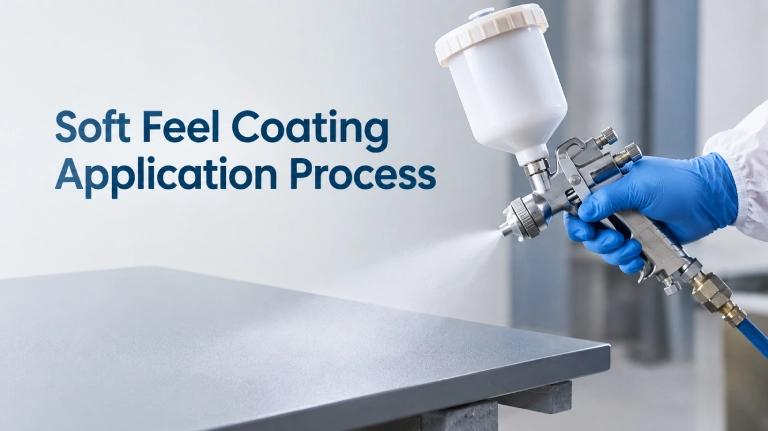
The soft feel coating application process starts with proper surface preparation, followed by correct mixing, controlled spray application, flash-off and curing. The final velvet or suede-like feel depends on more than the coating itself. Substrate condition, mixing accuracy, thinner level, film build, spray technique and curing all affect the finished surface.
For a broader overview of this coating system, see Soft Feel Paint Manufacturers in India.
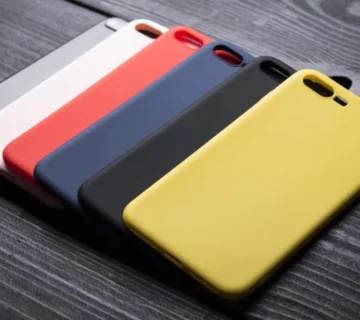
Soft feel coatings are commonly used on products where both appearance and surface touch matter, including automotive components, furniture, electronic housings, mobile covers, keyboards and other manufactured parts.
What Is Soft Feel Coating?
Soft Feel Coating is generally a coating system designed to produce a smooth, low-gloss surface with a soft, velvet-like, or suede-like touch.
Many systems are applied by spray and may use two components, such as a coating and hardener. The exact mixing ratio, thinner selection, application method and curing conditions depend on the product formulation.
For two-component polyurethane systems, proper crosslinking is important for developing the intended surface properties. Covestro, for example, describes polyurethane systems used in soft-feel coatings and notes their use in flexible two-component topcoats.
Soft Feel Coating Application Process: Step by Step
1. Check the Substrate
Before application, identify the material being coated.
Common substrates include:
- Plastic components
- Metal parts
- Wood and furniture components
- Automotive parts
- Electronic housings
- Previously coated surfaces
Do not assume that one preparation method works for every substrate. Plastic, for example, can vary significantly in surface energy and composition.
A small test panel is useful when the substrate or existing coating is unfamiliar.
2. Clean and Prepare the Surface
Surface preparation is one of the most important stages.
Remove:
- Dust
- Oil and grease
- Dirt
- Wax
- Silicone contamination
- Loose coating
- Oxidation where applicable
The surface should be dry and free from contaminants before coating.
PPG’s coating guidance similarly stresses cleaning and suitable surface preparation before application and recommends checking coating compatibility on the actual substrate.
Depending on the substrate, sanding, an appropriate primer, adhesion promoter, or other pretreatment may be required.
3. Prepare the Soft Feel Coating
If the product is a two-component system, mix the coating and hardener according to the manufacturer’s technical instructions.
This step requires care because changing the component ratio can affect curing and the final surface properties.
Avoid estimating the hardener by eye. Use accurate measuring equipment.
4. Control the Thinner
Thinner is normally used to achieve the spray viscosity required for the application equipment and desired finish.
Too much thinner can change spray behavior, film formation, drying and the final feel. Too little may make the coating difficult to atomize and can contribute to an uneven finish.
The correct thinner and quantity should therefore come from the coating manufacturer’s technical data rather than a fixed universal ratio.
5. Apply by Spray
Soft Feel Coating is commonly applied by spray equipment.
During spraying, focus on:
- Consistent gun movement
- Suitable spray distance
- Even overlap
- Controlled material flow
- Avoiding excessive film build
- Maintaining consistent application conditions
The objective is to create an even coating film rather than trying to achieve the complete finish in one excessively heavy pass.
6. Allow Proper Flash-Off
After spraying, allow the coating to flash off under the conditions specified for the product.
Avoid rushing the next stage. Solvent release and film formation need sufficient time before further handling or curing.
Poor flash-off can contribute to surface defects, uneven appearance, trapped solvent, or changes in the final texture.
7. Cure the Coating
Curing allows the coating system to develop its final properties.
The required curing method can differ between products. Some systems may cure at room temperature, while others can use force drying.
Do not apply one universal curing time or temperature to every soft-feel coating. Follow the manufacturer’s technical data sheet.
Proper curing is also important for polyurethane coating performance. Industry guidance notes that incorrect curing can contribute to defects such as poor adhesion, hazing, low gloss, orange peel and cracking.
What Affects the Final Soft Feel?
Several factors can change the finished touch and appearance:
Surface Preparation
A contaminated or poorly prepared substrate can reduce adhesion and create surface defects.
Mixing Ratio
Incorrect component proportions can affect curing and surface properties.
Thinner Level
The wrong thinner level can change spray atomization, film formation, drying and texture.
Film Thickness
Too much or too little coating can affect appearance and performance. PPG also identifies dry-film thickness as an important control point in coating application.
Spray Technique
Uneven spray passes can produce differences in texture and touch across the same part.
Drying and Curing
Insufficient or inconsistent curing can prevent the coating from reaching its intended final properties.
Common Soft Feel Coating Application Problems
Uneven Soft Feel
Possible causes include inconsistent spray application, incorrect viscosity, uneven film thickness, or poor curing.
Poor Adhesion
Contamination, unsuitable surface preparation, incompatible substrate conditions, or lack of an appropriate primer or adhesion promoter can contribute to adhesion problems.
Rough or Dry Spray Appearance
This can occur when the coating is not atomizing or flowing correctly. Spray settings, viscosity, application distance and environmental conditions should be checked.
Runs or Sagging
Excessive material deposition can cause runs. Reduce excessive film build and review spray technique and viscosity.
Different Feel Across the Same Part
Variation can result from inconsistent film thickness, spray overlap, mixing, or drying conditions. Production applications should use a controlled process rather than relying only on visual inspection.
How to Get More Consistent Results
For production coating, use a simple process-control checklist:
- Confirm the substrate.
- Prepare and clean the surface.
- Check coating and hardener condition.
- Measure components accurately.
- Use the specified thinner.
- Confirm spray equipment settings.
- Apply consistent coats.
- Control flash-off and drying.
- Follow the specified curing process.
- Inspect the finished part before production release.
A test panel should be evaluated before coating a large production batch, particularly when changing the substrate, coating system, equipment, or process conditions.
Soft Feel Coating for Different Applications
The application process can be relevant to several industries.
Automotive: interior trims, controls, handles and selected plastic components.
Furniture and wood: decorative components and surfaces where a low-gloss tactile finish is required.
Electronics: housings, covers, keyboards and other touch-sensitive product surfaces.
Industrial products: selected components where surface feel and appearance are part of the product requirement.
The coating system should always be selected according to the substrate, required appearance, handling conditions and performance requirements.
Conclusion
A successful soft feel coating application is a controlled process, not simply a matter of spraying paint onto a product. Surface preparation, component mixing, thinner control, spray technique, film thickness, flash-off and curing all work together.
For manufacturers, dealers, applicators and product companies, testing the coating on the actual substrate before production is one of the most practical ways to reduce application problems.
Nano Polycoat supplies coating solutions for different industrial and commercial applications and can help buyers evaluate the appropriate coating system based on the substrate and required finish.
FAQs
1. What is the Soft Feel Coating application process?
The Soft Feel Coating application process normally includes substrate inspection, cleaning, surface preparation, coating and hardener mixing where applicable, viscosity adjustment, spray application, flash-off and curing. The exact mixing ratio, thinner quantity, spray settings and curing conditions should follow the product’s technical data sheet.
2. How should a surface be prepared before Soft Feel Coating?
The surface should be clean, dry and free from dust, oil, grease, wax and other contaminants. Depending on the substrate, sanding, primer, or adhesion promoter may be required. Plastic surfaces need particular attention because different plastics can have different adhesion characteristics.
3. Can Soft Feel Coating be applied to plastic?
Yes, Soft Feel Coating can be used on suitable plastic components, but compatibility should be confirmed first. Plastic type, surface preparation, cleaning and adhesion promotion can affect the result. A test application on the actual plastic substrate is recommended before starting full production.
4. Why is the soft feel finish becoming uneven after spraying?
An uneven finish can result from inconsistent spray technique, incorrect viscosity, excessive or insufficient film thickness, unsuitable thinner levels, or inconsistent drying. Check the coating preparation, spray equipment, application distance, overlap and curing conditions before changing the formulation.
5. Can too much hardener affect Soft Feel Coating?
Yes. In a two-component system, changing the specified coating-to-hardener ratio can affect curing and final surface properties. Adding more hardener does not necessarily create a better soft finish. Always measure the components accurately and follow the manufacturer’s recommended mixing instructions.
6. Which thinner should be used for Soft Feel Coating?
The appropriate thinner depends on the coating formulation and application method. Using an unsuitable thinner or excessive quantity can change viscosity, drying, spray behavior and the final feel. Use only the thinner and reduction range recommended in the coating manufacturer’s technical documentation.
7. How can manufacturers improve Soft Feel Coating consistency?
Manufacturers can improve consistency by standardizing surface preparation, component measurement, viscosity, spray settings, film build, flash-off and curing. Keeping a test panel and production checklist can also help identify process variation before it affects a larger production batch.