
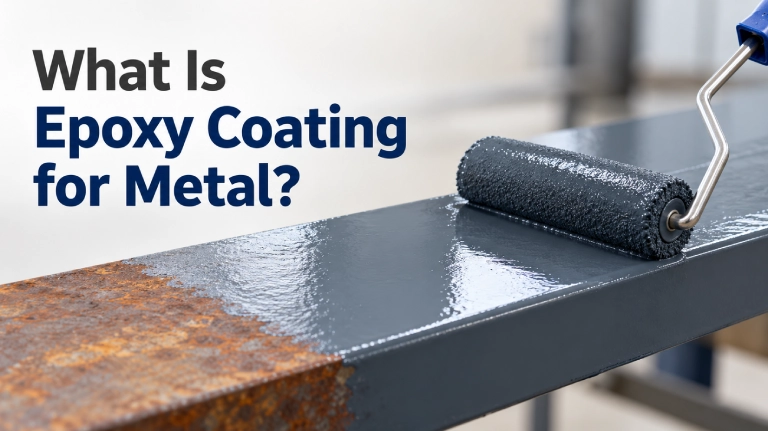
Epoxy coating for metal is a protective coating system designed to form an adherent film over a metal surface. It helps reduce direct contact between the metal and moisture, oxygen, chemicals and other environmental factors that can contribute to corrosion.
For industrial equipment, fabricated steel, machinery, tanks, automotive components and other metal surfaces, the coating result depends on more than the epoxy itself. Surface preparation, product compatibility, application conditions, film thickness and the service environment all affect performance.
If you are comparing products from epoxy paint manufacturers in India, check the product’s technical data and intended application before selecting a coating.
What Is Epoxy Coating?
Epoxy coating is a resin-based coating system that cures to form a solid film on a prepared surface. Depending on the formulation, epoxy coatings can be used for protection, adhesion, chemical resistance, abrasion resistance, or other performance requirements.
On metal, one important function is creating a barrier between the substrate and its surrounding environment. The Association for Materials Protection and Performance (AMPP) explains that protective coatings can help control corrosion by isolating metal from environmental elements.
Epoxy products vary considerably. Some are intended for industrial steel, while others may be developed for machinery, floors, tanks, equipment, or specific service conditions.
Therefore, the term epoxy coating alone is not enough to determine whether a product is suitable for a particular metal application.
How Does Epoxy Coating Protect Metal?
Metal corrosion occurs when the metal reacts with its surrounding environment. Moisture, oxygen, salts, chemicals and other exposure conditions can contribute to corrosion.
An epoxy coating can act as a physical barrier over the metal surface. When properly selected and applied, the coating reduces the opportunity for corrosive elements to reach the substrate.
However, coating protection is not simply a matter of applying a thick layer of paint.
Performance can be affected by:
- Surface cleanliness
- Rust and scale removal
- Surface profile
- Oil, grease, or salt contamination
- Coating compatibility
- Mixing and application procedure
- Film thickness
- Drying and curing conditions
- Moisture and temperature
- The actual service environment
AMPP also emphasizes that corrosion protection depends on the exposure environment and the complete coating system rather than one coating component alone.
Where Is Epoxy Coating Used on Metal?
Epoxy coatings are used across many industrial and commercial applications where metal surfaces need protection or a durable coating film.
Common applications include:
Industrial Machinery
Epoxy paint may be used on machinery, fabricated equipment, frames, panels and other metal components where a protective finish is required.
Structural Steel
Steel structures can require protective coating systems to reduce corrosion caused by atmospheric exposure. The appropriate system depends on the environment, design, maintenance requirements and expected service conditions.
Tanks and Equipment
Epoxy coatings may be used on selected tanks and equipment when the product is specifically rated for the intended exposure. Chemical contact, immersion, temperature and substrate conditions should be checked before application.
Automotive and Metal Components
Certain epoxy primers and coating systems are used on automotive and fabricated metal components. Product compatibility with the substrate and subsequent coats is important.
Construction and Fabricated Metal
Metal doors, frames, supports, fabricated components and other construction-related surfaces may use epoxy-based protective coatings depending on the project requirements.
How to Apply Epoxy Coating to Metal
Correct preparation is one of the most important parts of the coating process.
1. Inspect the Metal Surface
Check the substrate for:
- Rust
- Loose old coating
- Oil and grease
- Dust
- Moisture
- Mill scale
- Surface damage
The preparation method should match the existing surface and the coating specification.
2. Prepare the Surface
Remove contaminants and unsuitable existing material before coating.
Depending on the project, preparation can include solvent cleaning, mechanical cleaning, power-tool cleaning, abrasive blasting, or other specified methods.
AMPP maintains standards covering surface preparation methods because preparation helps improve coating adhesion and performance.
3. Use the Recommended Primer or System
Some metal coating systems use a primer before the epoxy topcoat. Others may be formulated as direct-to-metal products.
Do not assume that every epoxy paint can be applied directly over bare or rusty metal. Follow the product’s technical data sheet.
4. Mix the Product Correctly
For multi-component epoxy systems, the resin and curing component must be mixed according to the manufacturer’s instructions.
Avoid estimating the ratio by eye. The correct ratio, induction time, pot life and application window are product-specific.
5. Apply the Coating
Apply using the method specified for the product, such as spray, roller, or brush.
The goal is controlled and consistent coverage rather than simply applying as much material as possible.
6. Allow Proper Curing
Drying and curing are affected by the coating chemistry and environmental conditions.
Temperature, humidity, ventilation, film thickness and recoat timing can influence the final result. Always follow the manufacturer’s TDS for product-specific requirements.
What Can Cause Epoxy Coating Failure?
When an epoxy coating fails prematurely, the problem may not be the epoxy resin itself.
Common contributing factors include:
- Poor surface preparation
- Applying over oil, grease, dust, or salts
- Moisture on the substrate
- Incorrect mixing ratio
- Using an incompatible thinner
- Applying outside recommended conditions
- Excessive or insufficient film thickness
- Incorrect recoat timing
- Incompatible primer or topcoat
- Exposure beyond the product’s intended service conditions
This is why professional coating selection starts with the substrate and exposure environment, not just the product name.
Epoxy Coating vs. Epoxy Paint: Is There a Difference?
The terms are often used interchangeably, but context matters.
Epoxy paint is commonly used to describe an epoxy-based paint product used for a particular application. ‘Epoxy coating’ is a broader term that can describe an epoxy protective coating system.
For a buyer, the more important question is not which term appears on the label. It is whether the product is suitable for the specific metal, preparation standard, environment, application method and required performance.
What Should You Check When Buying Epoxy Paint?
Whether you are purchasing from an epoxy paint manufacturer, epoxy paint supplier, or distributor, ask for technical information before placing a larger order.
Check:
- Recommended substrates
- Intended application
- Primer requirements
- Mixing instructions
- Pot life
- Recoat interval
- Application method
- Recommended thinner, if applicable
- Film thickness guidance
- Drying and curing information
- Chemical or corrosion resistance claims
- Storage conditions
- TDS and SDS
For industrial buyers, batch consistency and technical support are also important. A product that works well in a controlled trial still needs consistent manufacturing and application guidance for repeat production.
Choosing an Epoxy Paint Manufacturer in India
When comparing an epoxy paint manufacturer in Ahmedabad, an epoxy paint manufacturer in Gujarat, or an epoxy paint supplier in India, look beyond price alone.
A practical supplier evaluation can include:
- Product documentation and TDS availability
- SDS and safe handling information
- Consistency between batches
- Clear application instructions
- Compatibility information
- Sample or trial support where applicable
- Packaging and supply requirements
- Technical assistance for application problems
For industrial projects, the coating should be selected according to the actual substrate and service conditions. AMPP’s coating guidance similarly emphasizes surface preparation, coating selection, application and inspection as parts of an effective protective coating process.
Final Thought
Epoxy coating for metal is more than a protective layer of paint. Its performance depends on the epoxy formulation, metal surface, preparation, application process, curing conditions and service environment.
For reliable results, start with the substrate and exposure conditions, then select a compatible coating system and follow the manufacturer’s TDS and SDS.
Nano Polycoat manufactures and supplies paint and coating products for industrial and commercial applications. Buyers can review the relevant product information and discuss their metal coating requirements before selecting an epoxy system.
FAQs
1. What is epoxy coating for metal used for?
Epoxy coating for metal is mainly used to create a protective film over prepared metal surfaces. It can help reduce exposure to moisture and other corrosive elements. Applications may include machinery, fabricated steel, equipment, tanks, automotive components and other industrial metal surfaces.
2. Is epoxy paint good for steel?
Epoxy paint can be suitable for steel when the product is designed for the intended application and the surface is properly prepared. Steel preparation, primer compatibility, environmental exposure, film thickness and curing conditions all influence coating performance and should be checked in the product TDS.
3. Can epoxy coating be applied over rusty metal?
Some epoxy coating systems are designed for properly prepared, tightly adhering rusted surfaces, while others require a cleaner substrate. Rust should not simply be painted over without checking the product requirements. Remove loose corrosion and follow the manufacturer’s specified preparation method before application.
4. How do I choose an epoxy paint manufacturer in India?
Compare manufacturers based on product documentation, substrate compatibility, application guidance, batch consistency, TDS and SDS availability, technical support, packaging and supply capability. The coating should also match the metal, exposure conditions, application method and performance requirements of your project.
5. What surface preparation is needed before epoxy coating?
Preparation depends on the metal condition and coating specification. It may include removing oil, grease, dust, rust, loose paint and other contaminants, followed by mechanical or abrasive preparation where required. The final surface should meet the coating manufacturer’s specified preparation standard.
6. Can epoxy coating be used outdoors on metal?
Some epoxy coatings are suitable for outdoor metal, but suitability depends on the formulation and exposure. Outdoor service can involve moisture, sunlight, temperature changes and other environmental stresses. Check the product’s technical data and whether a compatible topcoat is required for the intended service.
7. Is epoxy coating suitable for industrial metal equipment?
Epoxy coating can be used on industrial metal equipment when the product matches the substrate and operating environment. Selection should consider chemical exposure, moisture, temperature, abrasion, cleaning methods and required service life. Product-specific technical data should be reviewed before starting a larger application.