
NC putty and NC primer serve different purposes, but both can be important when preparing a surface for an NC topcoat. NC putty is primarily used to fill minor imperfections and level the surface, while NC primer helps create a more uniform base for subsequent coats. A typical preparation process is cleaning → NC putty → sanding → NC primer → sanding → NC topcoat, with the exact system depending on the substrate and product specification.
For businesses sourcing an NC coating system, working with established NC paint manufacturers in India can also help ensure that the putty, primer, thinner and topcoat are compatible.
What Is NC Putty?
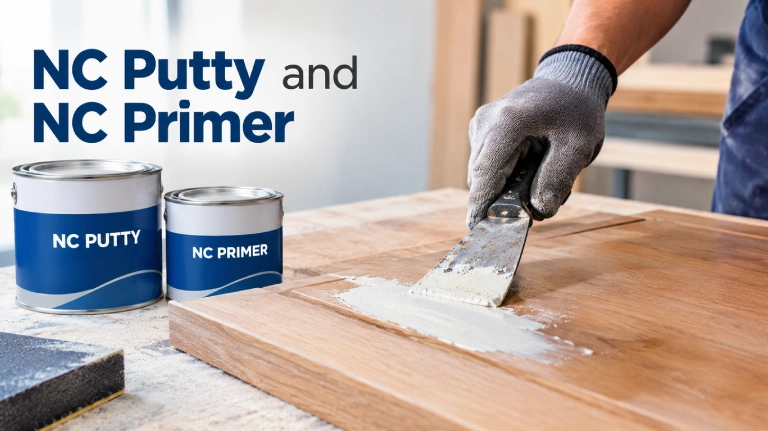
NC putty is a surface-preparation material used to fill small pores, scratches, pinholes and other minor imperfections before painting.
It helps create a more level surface so that the subsequent primer and topcoat can produce a cleaner appearance.
NC putty is particularly useful where the final finish needs to look smooth, such as furniture, woodwork and certain automotive or industrial applications.
However, putty should not be treated as a substitute for proper substrate preparation. Large defects, loose material, contamination or structural damage should be addressed before applying a thin surface-filling layer.
What Is NC Primer?
NC primer is a preparatory coating applied before the NC topcoat.
Its role is different from putty. While putty primarily fills and levels surface imperfections, primer creates a more consistent coating base and helps prepare the surface for the finishing layers.
The correct primer depends on the substrate, existing coating and complete NC paint system.
This distinction is important: putty corrects surface irregularities; primer prepares the surface for the finishing system.
NC Putty vs. NC Primer: What’s the Difference?
| Feature | NC Putty | NC Primer |
| Main purpose | Fill minor imperfections | Create a uniform base |
| Typical position | Before primer | Before topcoat |
| Main function | Level the surface | Prepare and seal the surface for finishing |
| Sanding | Usually required | Usually required before topcoat |
| Finish impact | Helps remove small surface defects | Helps create uniform topcoat appearance |
| Replacement | Should not replace primer where primer is specified | Should not be used as a thick substitute for putty |
The two products work together rather than competing with each other.
Correct NC Surface Preparation Process
1. Inspect the Substrate
Start by examining the surface under good lighting.
Look for:
- Scratches
- Pinholes
- Dents
- Uneven areas
- Old loose coatings
- Oil or grease
- Dust
- Moisture
- Rust or corrosion on metal
The preparation method should match the substrate and its condition.
Professional coating practice places strong emphasis on inspecting and preparing the substrate before coating because contaminants and poor preparation can compromise adhesion. AMPP’s surface-preparation standards specifically address cleaning and preparation methods designed to improve coating adhesion and performance.
2. Clean the Surface Thoroughly
Remove dust, grease, oil, wax and other contaminants before applying putty.
A coating should not be expected to bond properly to a dirty or contaminated substrate.
For production environments, cleaning should also be controlled consistently rather than relying only on visual inspection.
3. Apply NC Putty Where Required
Apply NC putty only where surface leveling is necessary.
Spread it evenly and avoid unnecessarily thick applications. A thick layer may take longer to dry and can introduce additional sanding or finishing problems.
The objective is to fill and level, not to build an excessive layer of material over the entire substrate.
4. Allow the Putty to Dry
Follow the product’s recommended drying conditions before sanding.
Drying time can vary depending on film thickness, temperature, ventilation, substrate and formulation.
Do not rush the next stage simply because the surface appears dry.
5. Sand the Putty Smooth
Once sufficiently dry, sand the puttied areas until they are level with the surrounding surface.
Check the surface by both sight and touch. Under strong side lighting, uneven areas that are difficult to see under normal lighting often become obvious.
Remove sanding dust completely before applying primer.
6. Apply NC Primer
Apply the recommended NC primer evenly over the prepared surface.
The primer should provide a consistent base without excessive film build. Application method, thinning and number of coats should follow the manufacturer’s technical documentation.
For professional production, maintaining consistent application conditions is important because variation in primer thickness can affect the final topcoat.
7. Sand the Primer
After the primer has reached the required sanding condition, sand it using the appropriate abrasive.
The purpose is to remove minor surface imperfections and create the appropriate surface condition for the NC topcoat.
Do not continue sanding aggressively once the surface has reached the required level. Excessive sanding can remove too much primer and expose underlying areas.
8. Inspect Before Applying the NC Topcoat
This is the stage where experienced applicators save time.
Before applying the final NC paint, inspect the surface for:
- Visible scratches
- Pinholes
- Sanding marks
- Uneven areas
- Dust particles
- Exposed substrate
- Glossy or contaminated spots
- Uneven primer coverage
If defects remain, correct them before topcoating.
Do not expect the NC topcoat to hide poor preparation.
Why Sanding Between Coats Matters
Sanding is not simply about making a surface feel smooth.
It helps remove minor imperfections and creates a more controlled surface for the next coating layer. In professional coating work, surface preparation and inspection are treated as important parts of the complete coating system, not as optional cosmetic steps.
The correct abrasive and sanding procedure, however, depends on the particular NC product and substrate. Always follow the manufacturer’s technical instructions.
Common NC Putty and Primer Mistakes
Applying putty over a dirty surface
Dust, oil and grease can interfere with adhesion. Clean the substrate before preparation.
Applying too much putty
A thick layer can create unnecessary drying and sanding problems. Apply only enough material to correct the imperfection.
Skipping primer
Putty and primer perform different jobs. If the coating system specifies an NC primer, omitting it can affect the uniformity and performance of the topcoat.
Applying primer over poorly sanded putty
Primer does not magically remove deep sanding marks or uneven putty work. Correct the surface first.
Using incompatible products
The putty, primer, thinner and NC topcoat should be selected as a compatible system wherever the manufacturer specifies one.
Using generic thinner ratios
There is no single thinner ratio that works for every NC coating. Viscosity requirements vary with formulation and application method.
Rushing the next coat
Drying and sanding windows matter. Follow the product’s technical data sheet rather than relying solely on a fixed time found online.
How to Know the Surface Is Ready for NC Topcoat
Before topcoating, use this simple checklist:
Surface: Clean and free from oil, grease and dust.
Profile: Smooth and appropriately sanded.
Putty: Fully dry, level and free from visible defects.
Primer: Evenly applied and properly dried.
Sanding: No obvious deep sanding marks.
Inspection: No pinholes, scratches or exposed areas that need correction.
Compatibility: Putty, primer, thinner and topcoat are suitable for the intended NC system.
If any of these checks fail, correct the problem before applying the finishing coat.
Choosing an NC Paint Manufacturer
For furniture manufacturers, automotive businesses, industrial users and paint dealers, the quality of the complete system matters more than the topcoat alone.
When evaluating an NC Paint Manufacturer in Gujarat or an NC Paint Supplier in India, consider:
- Product consistency
- Technical data sheets
- Compatible primer and putty systems
- Recommended thinner
- Application guidance
- Batch-to-batch consistency
- Packaging and storage guidance
- Technical support
- Suitability for your production process
For commercial users, consistent results across batches are especially important because a coating that performs differently from one production run to another can increase rework and material consumption.
Final Takeaway
NC putty and NC primer have different jobs and using them in the correct sequence is essential for a clean NC topcoat. Putty helps level minor imperfections, while primer creates a consistent base for the finishing coat.
The practical sequence is straightforward: inspect → clean → apply NC putty where needed → dry → sand → apply NC primer → dry → sand → inspect → apply NC topcoat.
The exact products, application method, thinner and drying intervals should always follow the manufacturer’s technical data sheet.
Nano Polycoat supplies NC coating solutions and supports businesses looking for reliable products from an experienced NC paint manufacturer in Ahmedabad, serving customers across India and selected international markets.
FAQs
- What is the difference between NC putty and NC primer?
NC putty is mainly used to fill small scratches, pores, pinholes and surface imperfections, while NC primer provides a more uniform base before the topcoat. They are not interchangeable. When the coating system requires both, putty is generally applied and sanded before the primer.
- Can NC primer be applied directly over NC putty?
Yes, when the NC putty and primer are compatible and the putty has been properly dried and sanded. The surface should be clean, level and free from sanding dust before priming. Always follow the specific manufacturer’s recommended preparation sequence and recoat conditions.
- How should I prepare wood before applying NC paint?
Prepare wood by cleaning it, removing loose material and sanding it appropriately. Apply NC putty to minor imperfections where required, allow it to dry, sand it level, then apply compatible NC primer. Sand the primer after drying before applying the NC topcoat.
- Is NC putty required before NC primer?
NC putty is not required on every surface. It is mainly used when the substrate has minor imperfections that need filling or leveling. If the surface is already properly prepared and smooth, the coating system may not require putty. Follow the manufacturer’s recommended system for the application.
- Which NC Paint Manufacturer in India should I choose?
Choose an NC Paint Manufacturer in India that provides consistent products, compatible putty and primer systems, technical documentation, suitable thinners and application guidance. For commercial production, also consider batch consistency, technical support and whether the complete system meets your substrate and finish requirements.
- Can I use any thinner with NC primer?
No. The thinner should be compatible with the specific NC primer and selected according to the manufacturer’s technical data sheet. Using an unsuitable thinner or incorrect amount can affect viscosity, drying, application, adhesion and finish. Application method can also influence the recommended viscosity.
- How do I know NC primer is ready for the topcoat?
NC primer should be sufficiently dry according to its product instructions and properly sanded where the system requires sanding. The surface should be smooth, clean and free from dust, scratches, pinholes and exposed areas. Always follow the specified recoat and sanding conditions before topcoating.