
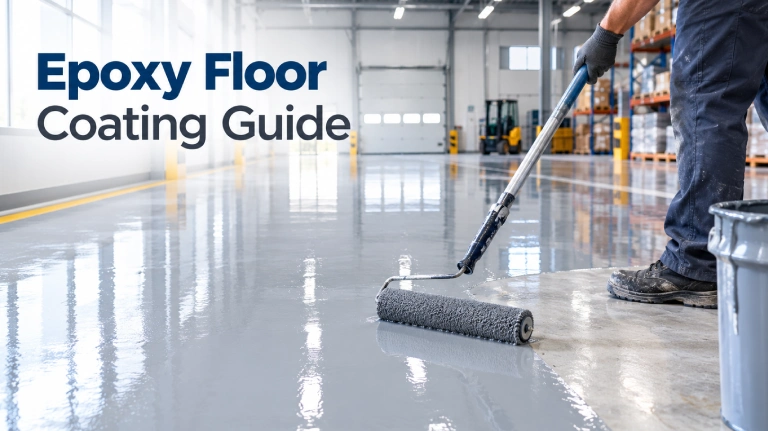
An epoxy floor coating can provide a hard, seamless and easy-to-maintain surface for warehouses, factories and garages when the concrete is properly prepared and the coating system is selected for the site’s actual conditions. A successful installation normally involves concrete inspection, surface preparation, repairs, primer where required, epoxy application, adequate curing and final quality checks.
For businesses evaluating an industrial flooring system, choosing experienced epoxy paint manufacturers in India can also help ensure the resin, hardener, primer and application recommendations are suitable for the intended environment.
What Is Epoxy Floor Coating?
Epoxy floor coating is a protective resin-based coating system applied over a suitable concrete substrate.
Once properly mixed, applied and cured, the coating can form a dense surface designed to withstand demanding service conditions. Depending on the formulation, epoxy systems can offer good resistance to abrasion, chemicals, oils, impact and repeated foot or vehicle traffic.
However, performance depends on more than the resin itself.
Concrete condition, surface preparation, coating thickness, product compatibility, application technique and curing conditions all influence the final result.
Why Use Epoxy Flooring in Industrial Areas?
Epoxy flooring is often considered where a facility needs a durable and relatively easy-to-clean floor surface.
Potential advantages include:
- Seamless appearance
- Good abrasion resistance
- Easier routine cleaning
- Protection of concrete
- Improved appearance and housekeeping
- Resistance to selected chemicals and oils
- Ability to create designated work or traffic zones
- Compatibility with different industrial flooring systems
The right formulation should always be selected according to the actual exposure conditions rather than assuming every epoxy coating performs the same way.
Epoxy Flooring for Warehouses
Warehouses experience a different type of floor stress from residential garages.
Forklifts, pallet trucks, racks, pallets and continuous foot traffic can create repeated mechanical wear. Spilled oils, chemicals, water or cleaning solutions may also become concerns depending on the facility.
For warehouses, consider:
- Traffic intensity
- Forklift wheel loads
- Abrasion resistance
- Impact exposure
- Cleaning frequency
- Chemical exposure
- Slip resistance
- Required downtime for installation
OSHA’s warehouse guidance emphasizes maintaining floors and aisles clear of spills and other hazards and addressing conditions that can contribute to slips, trips and falls.
An epoxy system should therefore be evaluated as part of the facility’s overall flooring and housekeeping requirements.
Epoxy Flooring for Factories
Factory floors can face more demanding conditions than warehouses.
Depending on the industry, the floor may encounter:
- Oils and lubricants
- Process chemicals
- Heavy equipment
- Metal components
- Repeated impact
- Heat or temperature changes
- Water and cleaning chemicals
- Continuous production traffic
For these environments, the coating specification should begin with the exposure conditions.
An experienced epoxy paint manufacturer or supplier in Gujarat should be able to discuss the expected traffic, chemical exposure, substrate condition and required finish before recommending a system.
Epoxy Flooring for Garages
Garages generally have lower traffic than industrial factories, but the floor may still be exposed to vehicle tyres, oil, grease, dirt and occasional chemical spills.
A suitable garage coating can provide:
- Easier cleaning
- Improved appearance
- Protection against routine contamination
- A more uniform floor surface
- Better resistance to everyday wear than an unprotected concrete surface
For a commercial vehicle workshop or service garage, however, the requirements may be closer to industrial flooring than a typical residential garage.
Epoxy Floor Coating Application Process
1. Inspect the Concrete
Before coating, examine the concrete for cracks, weak areas, oil contamination, laitance, previous coatings and other defects.
The substrate must be suitable for the selected coating system.
AMPP’s guidance on concrete coating selection highlights the importance of evaluating the substrate and choosing preparation methods according to its condition.
2. Clean and Prepare the Surface
Remove dirt, grease, oil, loose particles and existing contaminants.
Depending on the condition of the concrete, preparation may involve mechanical grinding, shot blasting, abrasive blasting, scarifying or other suitable methods. AMPP identifies several preparation methods for concrete, ranging from cleaning to more aggressive mechanical techniques.
The goal is to create a sound, clean and appropriately prepared surface for the coating.
3. Repair Cracks and Defects
Repair suitable cracks, holes, damaged areas and other surface defects before coating.
Do not assume epoxy will automatically bridge every crack. Structural movement or significant concrete deterioration requires proper assessment before coating work proceeds.
4. Apply Epoxy Primer Where Specified
Some epoxy flooring systems use a primer to improve substrate penetration, adhesion and uniformity.
The primer should be compatible with the subsequent epoxy layers and applied according to its technical specification.
5. Apply the Epoxy Coating
Mix the resin and hardener in the manufacturer’s specified proportions.
Apply the coating using the recommended method and maintain the required film thickness. Avoid making assumptions about mixing ratios, pot life or recoat intervals because these vary between formulations.
For larger facilities, application should be planned around production schedules so that the floor has enough time to cure before heavy traffic resumes.
6. Allow Proper Curing
Curing is different from simply becoming touch-dry.
The floor should remain protected from unnecessary traffic, water, chemicals and contamination until the coating has reached the required cure condition.
The exact cure time depends on the formulation and environmental conditions.
How to Choose the Right Epoxy Floor Coating
Before buying an epoxy floor coating, answer these questions:
What traffic will the floor receive?
A light-use garage and a forklift warehouse should not automatically receive the same system.
What chemicals will contact the floor?
Identify oils, solvents, acids, alkalis, cleaning chemicals and other substances that may be present.
Is slip resistance required?
Wet processing areas, workshops and places exposed to oil or water may need a suitable slip-resistant surface profile.
What is the condition of the concrete?
A coating cannot compensate for severely damaged or unsuitable concrete.
How quickly must the floor return to service?
Curing and recoat schedules should be considered during project planning.
What maintenance will be required?
Select a finish that can withstand the cleaning methods and chemicals used at the facility.
Common Epoxy Flooring Mistakes
Coating poorly prepared concrete
This is one of the biggest risks. AMPP notes that preparation can range from basic cleaning to mechanical methods depending on the substrate.
Applying over oil-contaminated concrete
Oil and grease can interfere with coating adhesion and should be properly addressed during preparation.
Choosing a coating based only on price
The cheapest coating may not be suitable for heavy traffic, chemical exposure or industrial cleaning requirements.
Ignoring moisture
Concrete moisture conditions can affect coating performance. The project specification should include appropriate moisture assessment before installation where required.
Applying excessive thickness without a reason
More coating is not automatically better. Film thickness should be based on the specified system and service conditions.
Returning heavy traffic too early
Forklifts and equipment should not be allowed back onto the floor before the coating has reached the manufacturer’s recommended service condition.
Epoxy Floor Maintenance
A properly maintained floor can remain functional and attractive for longer.
Basic maintenance should include:
- Remove spills promptly.
- Keep the surface free from abrasive debris.
- Use cleaning products compatible with the coating.
- Inspect high-traffic areas periodically.
- Repair damaged sections before deterioration spreads.
- Maintain drainage in areas exposed to water.
OSHA requires workplace walking-working surfaces to be maintained in a clean and orderly condition and kept free from hazards, while wet processes require appropriate attention to drainage and dry standing areas.
Maintenance is therefore not simply about appearance; it is part of responsible facility management.
Choosing an Epoxy Paint Manufacturer or Supplier
When purchasing an industrial epoxy system, look beyond the product name.
A reliable epoxy paint supplier in India should be able to provide:
- Technical data sheets
- Product and hardener specifications
- Recommended mixing instructions
- Application guidance
- Suitable primer information
- Recoat and curing guidance
- Chemical-resistance information where applicable
- Consistent batch quality
- Technical support for project requirements
For large warehouses and factories, this information helps the buyer compare products based on actual operating conditions rather than marketing claims.
Final Takeaway
A successful epoxy floor starts with the concrete, not the coating bucket. Proper inspection, cleaning, mechanical preparation, repairs and compatible coating selection are critical to achieving reliable performance.
Warehouses need to consider forklift and pallet traffic. Factories may require greater resistance to chemicals, impact and continuous industrial use. Garages typically focus on vehicle traffic, oil, grease and easy maintenance.
The best approach is to select the complete flooring system according to the substrate, exposure, traffic and maintenance requirements.
Nano Polycoat provides epoxy coating solutions as an epoxy paint manufacturer in Ahmedabad, serving industrial and commercial requirements across India and selected international markets.
FAQs
- What is an epoxy floor coating guide for warehouses?
An epoxy floor coating guide for warehouses covers substrate inspection, concrete preparation, repairs, primer selection, epoxy application, curing and maintenance. Warehouse flooring should also account for forklift traffic, pallet movement, abrasion, spills and cleaning requirements. The coating system should be selected according to the facility’s actual operating conditions.
- Is epoxy flooring suitable for factory floors?
Epoxy flooring can be suitable for factory floors when the selected system matches the site’s traffic, chemical exposure, impact and maintenance requirements. Different factories have different operating conditions, so product selection should consider the concrete substrate, expected loads, contaminants, cleaning processes and required service performance.
- How should concrete be prepared before epoxy floor coating?
Concrete should be inspected, cleaned and mechanically prepared as necessary to remove contaminants and create a suitable surface. Depending on its condition, preparation may include grinding, shot blasting, abrasive blasting or other methods. Cracks and defects should also be addressed before the coating system is applied.
- How do I choose an epoxy paint manufacturer in India?
Choose an epoxy paint manufacturer in India that provides consistent products, technical documentation, compatible resin and hardener systems, application guidance and support. For industrial projects, also evaluate chemical resistance, abrasion performance, recommended film thickness, curing requirements and whether the supplier understands your site’s operating conditions.
- Is epoxy floor coating suitable for garages?
Yes, epoxy floor coating can be suitable for garages because it can provide a durable, easy-to-clean surface with resistance to common automotive contaminants. However, commercial workshops and heavy vehicle garages may need a more demanding industrial system because of greater traffic, impact, oils, chemicals and equipment loads.
- How long does epoxy floor coating take to cure?
Curing time depends on the specific epoxy formulation, temperature, humidity, film thickness and site conditions. A floor may become touch-dry before it reaches its required service condition. Always follow the manufacturer’s technical data sheet for recoat, foot-traffic and heavy-traffic requirements.
- What should I ask an epoxy paint supplier in India?
Ask about the complete coating system, substrate preparation requirements, resin and hardener ratio, primer compatibility, recommended thickness, chemical resistance, curing time, application method and maintenance. For industrial flooring, also explain the expected traffic, equipment loads, chemicals and cleaning conditions so the supplier can recommend an appropriate system.