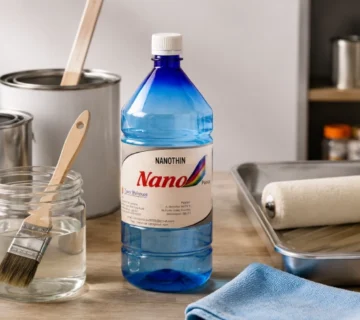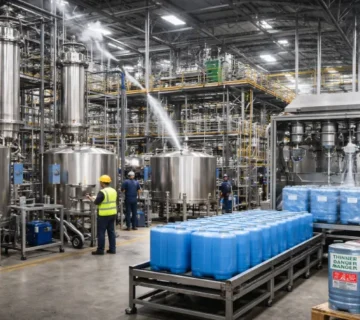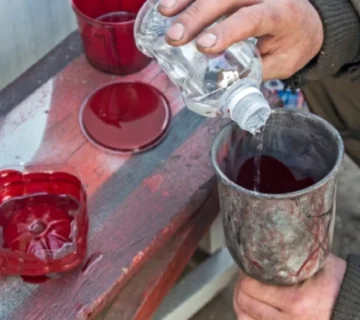
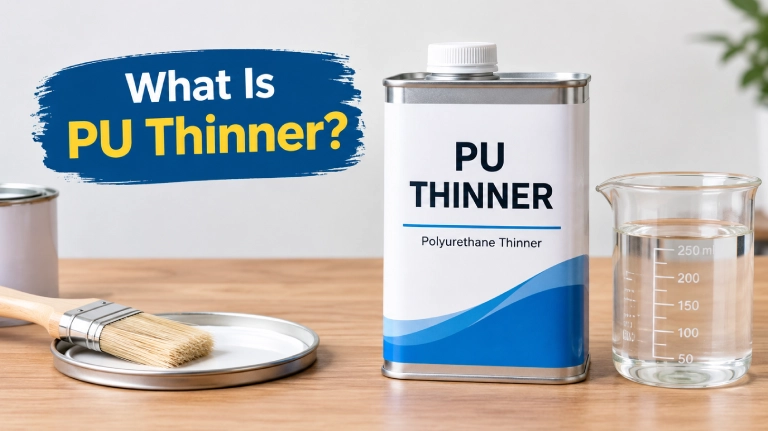
PU thinner is a solvent blend used with compatible polyurethane coatings to adjust viscosity and improve application. It can help a PU coating flow and atomize correctly during spraying, but it is not a substitute for PU hardener and should not be added using a universal percentage.
For buyers and applicators, the important point is compatibility. The correct thinner depends on the PU paint system, application method, equipment and working conditions. Before mixing, always check the product’s technical data sheet (TDS).
For information about different thinner products and applications, see Thinner Manufacturers in India.
What Does PU Thinner Do?
The main job of a PU thinner is to adjust the working viscosity of a polyurethane coating.
A coating that is too thick may not atomize properly through a spray gun. This can affect spray pattern, flow and surface appearance. A compatible thinner can bring the coating closer to the application viscosity recommended for the product.
Depending on the coating system, thinner can help with:
- Adjusting viscosity for spraying
- Improving flow and leveling
- Supporting proper atomization
- Making application easier under suitable conditions
- Helping achieve a more uniform wet film
The exact effect depends on the formulation. A thinner should therefore be selected as part of the coating system rather than treated as a general-purpose solvent.
PU Thinner vs PU Hardener: What Is the Difference?
PU thinner and PU hardener perform different jobs.
| Component | Main purpose |
| PU Thinner | Adjusts viscosity and application characteristics |
| PU Hardener | Reacts with the coating system to support curing and film formation |
| PU Paint | Provides the resin, pigments and other components of the coating system |
This distinction is important in two-component PU coatings. Adding more thinner does not compensate for an incorrect hardener ratio, and adding extra hardener is not a method for controlling viscosity.
For polyurethane coatings, the hardener and thinner must both be compatible with the specific paint system.
How Is PU Thinner Used?
There is no single PU thinner ratio that works for every polyurethane paint.
The recommended amount can depend on:
- Type of PU coating
- Base and hardener system
- Spray gun and nozzle
- Application method
- Ambient temperature
- Surface condition
- Desired application viscosity
- Required film thickness
A practical mixing process is
1. Check the Product Data Sheet
Start with the manufacturer’s TDS. Look for the recommended thinner type, mixing sequence, application viscosity and permitted thinner range.
2. Mix the PU Paint and Hardener Correctly
If the product is a two-component system, follow the specified base-to-hardener ratio first. Do not use thinner to correct an incorrect hardener ratio.
3. Add Thinner Gradually
Add only the amount recommended for the product and application conditions. Mix thoroughly and check the working viscosity.
4. Test Before Full Production
For furniture, automotive parts or industrial production, a small test panel can help confirm spray behavior, appearance and drying before applying the coating to the complete batch.
This approach can reduce avoidable problems caused by changing several variables at the same time.
What Happens If You Add Too Much PU Thinner?
Adding excessive thinner can change the way a PU coating behaves.
Possible problems include:
- Lower film build
- Excessive sag or runs
- Changes in drying behavior
- Reduced coverage
- Poorer appearance or gloss consistency
- Longer solvent release in some conditions
- Changes in flow and leveling
- Greater variation between application batches
The exact result depends on the coating formulation and solvent blend.
For this reason, “more thinner” should not be treated as a shortcut to better finish quality. If a coating appears too thick, first check the recommended application viscosity and the conditions affecting it.
Why Does PU Thinner Selection Matter?
A PU coating is a formulated system. Its resin, hardener and solvent package are designed to work together.
Using an incompatible thinner can change evaporation behavior and application characteristics. A thinner that works with one polyurethane product may not be suitable for another.
This is particularly important for production users who need repeatable results across multiple batches.
When purchasing from a PU thinner manufacturer or PU thinner supplier, buyers should ask whether the thinner is intended for their specific PU coating system.
Where Is PU Thinner Used?
PU coating systems are used in many applications, so the thinner selection can vary with the job.
Common areas include:
1. Furniture and Wood Coatings
PU systems are widely used for wood and furniture finishes where controlled application and surface appearance are important. Thinner selection can affect sprayability, flow and the final appearance.
2. Automotive Applications
Automotive refinishing and component coatings can require controlled viscosity and spray behavior. The correct thinner should match the specific paint system and application process.
3. Industrial Coatings
Industrial users may apply polyurethane coatings to machinery, fabricated components and other surfaces. Production teams generally need consistent mixing and application conditions from batch to batch.
4. Construction and Specialty Applications
Some polyurethane coatings are used for protective or specialty purposes. However, the recommended thinner should always come from the coating manufacturer’s technical documentation.
How Should You Choose a PU Thinner Supplier?
Whether you are purchasing from a PU thinner manufacturer in India or a local supplier, price should not be the only consideration.
Ask for:
- Product identification and technical information
- Recommended applications
- Compatibility with your PU coating
- TDS and SDS
- Recommended mixing or thinning instructions
- Packaging options
- Batch identification
- Technical support when application problems occur
For businesses buying regularly, consistent product quality and clear technical documentation can be important for maintaining repeatable production results.
PU Thinner Safety: What Should Users Know?
PU thinner may contain volatile solvents, while some polyurethane coating systems can involve isocyanates. OSHA identifies polyurethane paints among applications where workers may encounter isocyanates and notes potential respiratory and skin hazards.
Users should therefore follow the coating and thinner SDS, use suitable ventilation and wear the protective equipment specified for the product and application.
Do not rely on smell as a safety check. Chemical exposure controls should be based on the product’s safety information and workplace requirements.
What Should Buyers Check Before Ordering PU Thinner?
Before placing an order with a PU thinner supplier in India, confirm these points:
- Which PU paint or coating will be used?
- Is the thinner specifically recommended for that system?
- What application method will be used?
- What viscosity is required?
- Is the thinner suitable for the operating conditions?
- Is a TDS available?
- Is an SDS available?
- Are batch details provided?
- Can the supplier provide technical assistance if application issues occur?
These questions are particularly useful for furniture manufacturers, automotive businesses, industrial coating units, dealers and distributors.
Conclusion
PU thinner is mainly used to adjust the viscosity and application behavior of compatible polyurethane coatings. It can support proper spraying, flow and leveling, but the correct amount depends on the coating system and application conditions.
The safest approach is simple: use the compatible thinner, follow the manufacturer’s TDS, avoid excessive addition, and test the coating before full-scale production.
Nano Polycoat supplies paint and thinner solutions for customers in India and international markets, including Africa and Sri Lanka. For businesses evaluating PU thinner requirements, product compatibility and application conditions should be confirmed before selecting a thinner.
FAQs
1. What is PU thinner used for?
PU thinner is used to reduce the viscosity of compatible polyurethane coatings so they can be applied more effectively. It can support spray atomization, flow and leveling. The correct thinner and quantity depend on the specific PU coating, application method, equipment and working conditions.
2. Is PU thinner the same as PU hardener?
No. PU thinner and PU hardener have different functions. Thinner primarily adjusts viscosity and application behavior, while hardener participates in the curing process of compatible two-component PU coatings. Thinner should never be used as a replacement for the specified hardener.
3. How much PU thinner should be added to PU paint?
There is no universal PU thinner ratio for every product. The recommended amount depends on the formulation, application method, spray equipment and conditions. Users should follow the coating manufacturer’s TDS instead of applying a fixed percentage across different PU paint systems.
4. Can PU thinner be used with any polyurethane paint?
Not necessarily. Different polyurethane coatings can require different solvent blends and application conditions. Using an incompatible thinner may affect viscosity, drying, flow or appearance. Before purchasing from a PU thinner manufacturer in India, confirm compatibility with the specific PU paint system.
5. What happens if too much PU thinner is added?
Excessive thinner can reduce film build and coverage and may cause application or appearance problems such as sagging, uneven finish or changes in drying behavior. The exact effect depends on the coating formulation. If viscosity is incorrect, check the TDS before adding more solvent.
6. How do I choose a PU thinner manufacturer in Gujarat?
Look for a supplier that can provide product identification, TDS, SDS, compatibility information and clear application guidance. Buyers should also discuss their PU coating, application method and operating conditions so the supplier can identify an appropriate thinner system.
7. Is PU thinner safe to handle?
PU thinner should be handled according to its SDS and workplace safety requirements. Solvent vapors can create health and fire hazards, while some PU coating systems can involve isocyanate exposure. Appropriate ventilation, chemical-resistant protection and other specified controls should be used during handling and application.