
The best way to apply PU paint on wood is to treat it as a complete coating system, not simply as a single coat of paint. Start with properly sanded and clean wood, use the recommended sealer or primer, sand between suitable coats, mix the PU components exactly as specified by the manufacturer and apply thin, even topcoats. This process creates the smooth base needed for a deep, glossy finish.
For manufacturers, furniture businesses and professional applicators looking for reliable coating systems, choosing the right PU paint manufacturers in India is also important because product compatibility, mixing ratios and application methods directly affect the final result.
What You Need Before Applying PU Paint on Wood
Before starting, keep the following ready:
- Suitable PU paint or PU wood-finish system
- PU sealer or primer, where specified
- Recommended PU hardener
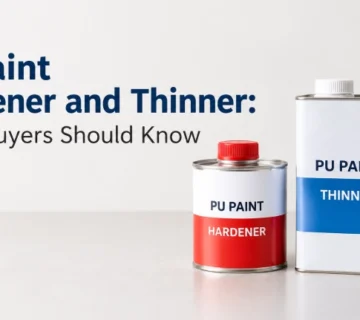
- Manufacturer-approved PU thinner
- Sandpaper in suitable grits
- Clean, lint-free cloth
- Spray gun, brush or other recommended application equipment
- Mixing containers and measuring equipment
- Appropriate personal protective equipment
Always check the product’s technical data sheet before mixing. Base-to-hardener ratios, thinner percentages, drying times and application viscosity vary between PU products. A professional application should never rely on a generic ratio when the manufacturer’s specification is available.
Step-by-Step: How to Apply PU Paint on Wood
1. Prepare and Sand the Wood
Good gloss begins with good preparation.
Sand the wooden surface evenly, following the direction of the grain. For many wood-finishing systems, medium-to-fine abrasives are used progressively rather than trying to create a smooth surface with one very fine grit.
Remove old coatings, loose particles, grease and other contaminants where necessary. Product guidance from established wood-coating manufacturers also recommends progressive sanding before coating.
2. Remove All Dust
After sanding, remove every trace of sanding dust.
Dust trapped under a wet PU coating can create roughness, pinholes and visible imperfections. Use a clean cloth or suitable dust-removal method and make sure the surface is dry and clean before coating.
This step looks simple, but it has a major effect on furniture-grade finishes.
3. Repair Dents, Cracks and Imperfections
Inspect the surface under good lighting.
Fill dents, joints, nail holes or other visible imperfections with a compatible wood filler where required. Allow the filler to dry properly and sand it level with the surrounding surface.
For porous or resinous wood, the coating system may also require a suitable insulating or sealing step.
4. Apply the PU Sealer or Primer
The sealer helps create a more uniform base before the final PU coating.
Apply the recommended number of sealer or primer coats according to the product specification. After drying, sand the surface lightly to remove unevenness and prepare it for the topcoat.
A typical professional PU wood system uses a sequence such as sealer → sanding → topcoat, although the exact system depends on the substrate and product.
5. Mix PU Paint, Hardener and Thinner Correctly
For two-component PU systems, accurately measure the base and hardener.
Do not estimate the ratio by eye. Use the ratio stated in the manufacturer’s technical documentation. If a thinner is required, use the recommended PU thinner and add only the specified amount.
Too much thinner can reduce film build and change drying or flow characteristics. Too little can make application difficult and affect the finish.
For this reason, a dependable PU paint supplier in India should provide clear technical guidance along with the product.
6. Apply the First PU Topcoat
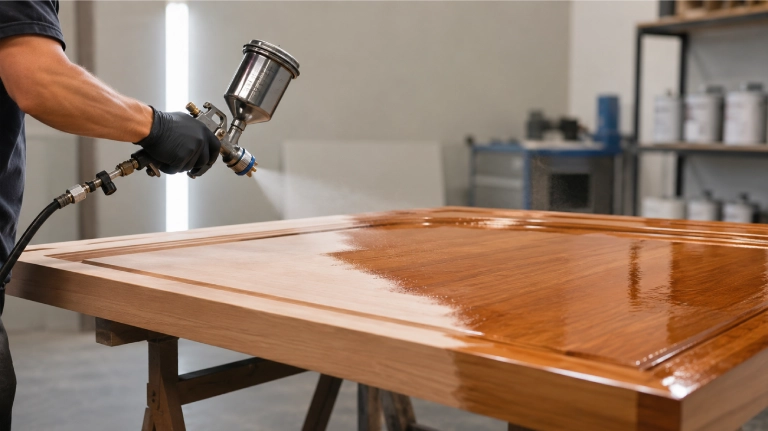
For high-quality furniture and woodwork, spray application is commonly used because it can produce a more uniform film with fewer brush marks.
Apply a controlled, even coat rather than trying to achieve the final gloss in one heavy pass.
Avoid excessive wet film thickness. Heavy application can contribute to runs, sagging, solvent-related defects and longer drying.
7. Sand Between Coats
Once the first topcoat has dried sufficiently according to the product instructions, lightly sand it using an appropriate fine abrasive.
The objective is not to remove the coating. You are creating a smooth, level surface and removing minor dust particles or surface imperfections.
Clean the surface thoroughly before applying the next coat.
8. Apply the Final Gloss Coat
Apply the final PU topcoat evenly and consistently.
Pay particular attention to edges, corners and areas where the spray pattern overlaps. Maintain a consistent application technique throughout the panel.
A glossy finish depends on the quality of the surface beneath it. If the substrate is uneven, the final coat will not hide every defect.
9. Allow Proper Curing
Do not judge the coating only by how quickly it becomes touch-dry.
Drying and curing are different stages. The surface may feel dry while the coating is still developing its final hardness and resistance.
Keep the finished piece away from dust, moisture, excessive handling and contamination during the recommended curing period.
How to Get a Better Glossy PU Finish
For a professional-looking result, focus on these details:
- Keep the wooden surface completely clean before every coat.
- Sand progressively rather than using one abrasive for every stage.
- Use the correct sealer for the substrate.
- Follow the manufacturer’s base, hardener and thinner ratio.
- Apply controlled coats instead of one excessively heavy coat.
- Maintain suitable ventilation and application conditions.
- Allow sufficient drying time between coats.
- Avoid touching or moving the surface before adequate curing.
- Inspect the surface under strong, angled lighting before the final coat.
The final gloss is usually the result of surface preparation + correct coating system + application technique + curing, rather than the topcoat alone.
Common PU Paint Application Mistakes on Wood
Applying PU over dusty wood
Even small particles can become visible in a high-gloss finish. Always clean the surface after sanding.
Skipping the sealer
Bare wood can absorb coating unevenly, especially when the substrate is porous. A suitable sealer helps create a more consistent base.
Using the wrong thinner
A thinner selected only because it is inexpensive or readily available may not be compatible with the PU system. Use the thinner recommended for the product.
Applying very thick coats
More material does not necessarily produce better gloss. Excessive film thickness can create application and drying problems.
Ignoring environmental conditions
High humidity, dust, poor ventilation and unsuitable temperature can affect the coating process. Always follow the product’s specified application conditions.
Treating touch-dry as fully cured
Furniture should not be put into heavy service simply because the surface feels dry. Follow the manufacturer’s curing guidance.
PU Paint Safety: An Important Consideration
Many professional PU coating systems are solvent-based and some spray-applied polyurethane products can contain isocyanates. Spray operations therefore require appropriate engineering controls, ventilation and respiratory protection based on the product and exposure risk.
OSHA provides specific guidance concerning respiratory protection for spray operations involving paints containing isocyanates.
Always read the product Safety Data Sheet (SDS) and follow the manufacturer’s safety instructions before application.
Choosing the Right PU Paint Supplier
For furniture manufacturers, woodworkers and distributors, product quality is only one part of the buying decision.
A reliable PU Paint Manufacturer in Gujarat or supplier should be able to provide:
- Clear product specifications
- Recommended mixing ratios
- Suitable hardener and thinner information
- Application guidance
- Technical data sheets and SDS
- Consistent batch quality
- Suitable systems for different wood substrates
- Support for spray and production applications
For larger furniture and manufacturing operations, consistency between batches can be just as important as the appearance of one finished sample.
Final Takeaway
Learning how to apply PU paint on wood is mainly about controlling the complete process. Prepare the wood carefully, seal and sand the surface properly, follow the correct mixing ratio, apply controlled coats, sand between compatible coats and allow enough time for curing.
A high-gloss finish is not created by simply applying more paint. It comes from a clean substrate, compatible products, controlled application and disciplined finishing practices.
For businesses looking for professional wood-coating solutions, Nano Polycoat provides PU coating solutions as a PU paint manufacturer in Ahmedabad, serving industrial and commercial requirements in India and selected international markets.
FAQs
- How to apply PU paint on wood for a glossy finish?
To apply PU paint on wood, first sand and clean the surface, repair imperfections and apply the recommended sealer or primer. After sanding the sealed surface, mix the PU base, hardener and thinner according to the product instructions. Apply thin, even topcoats and allow proper drying and curing.
- Can PU paint be applied directly to bare wood?
PU paint can sometimes be applied to prepared wood, but applying a compatible sealer or primer is often recommended for a more uniform finish. Bare wood can absorb coating unevenly, particularly when porous. The correct system depends on the wood type and the manufacturer’s product specifications.
- Which sandpaper is best before applying PU paint on wood?
The appropriate grit depends on the condition of the wood and the coating stage. A common approach is progressive sanding, starting with a suitable medium grit and moving to finer grits before coating. Between coats, use the grit recommended for that particular PU system.
- How many coats of PU paint should be applied to wood?
The number of coats depends on the PU system, substrate and required finish. Professional systems commonly use a sealer or primer followed by one or more topcoats. Instead of applying unnecessary coats, follow the manufacturer’s recommended film thickness, recoat time and coating sequence.
- Can I use any thinner with PU paint for wood?
No. PU coatings should be diluted only with the thinner recommended for that specific product or coating system. The wrong thinner can affect viscosity, drying, adhesion, gloss and film formation. Always check the technical data sheet before adding thinner to a PU coating.
- Is spray application better for a glossy PU wood finish?
Spray application is commonly preferred for furniture and professional wood finishing because it can produce a more even film with fewer visible application marks. However, the equipment, viscosity, spray pressure and technique must match the coating manufacturer’s recommendations for consistent results.
- How do I choose a PU paint manufacturer in India?
Look for a manufacturer that offers consistent product quality, clear technical documentation, compatible hardeners and thinners, application guidance and support for your specific wood-coating process. For commercial production, also evaluate batch consistency, technical support, packaging and suitability for your required finish.