
Choosing the right automotive paint is one of the most important decisions for vehicle manufacturers, auto body shops, component manufacturers and refinishing professionals. The coating not only determines the appearance of the vehicle but also affects durability, corrosion resistance, maintenance and environmental impact.
Today, the most common options are water-based and solvent-based automotive paints. Each has its own advantages and is suited to different applications. Understanding the differences helps manufacturers and businesses select the coating that best matches their production requirements.
If you are looking for high-quality coatings from experienced automotive paint manufacturers in India.
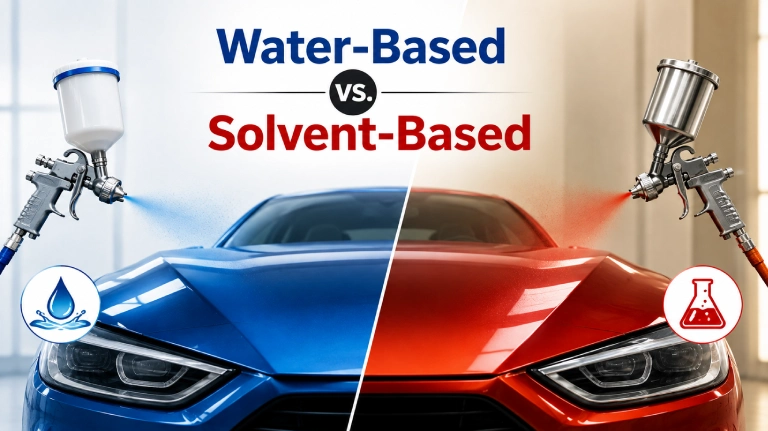
This guide compares water-based vs. solvent-based automotive paint to help you make an informed decision.
What Is Water-Based Automotive Paint?
Water-based automotive paint uses water as the primary carrier instead of traditional solvents. It contains significantly lower levels of volatile organic compounds (VOCs), making it a more environmentally friendly option.
Water-based coatings are widely used by modern automobile manufacturers because they offer excellent color accuracy and help reduce emissions during the painting process.
Key Benefits
- Lower VOC emissions
- Better environmental performance
- Excellent color matching
- Smooth finish
- Reduced odor
- Improved workplace conditions
Many global automotive manufacturers now use water-based paints in OEM production facilities.
What Is Solvent-Based Automotive Paint?
Solvent-based automotive paint uses organic solvents as the primary carrier. These coatings have been used for many years and remain popular in industrial manufacturing, commercial vehicles, heavy equipment and automotive refinishing.
They are known for their strong adhesion, fast curing under various conditions and excellent durability.
Key Benefits
- Excellent adhesion
- High durability
- Strong chemical resistance
- Good weather resistance
- Reliable performance in demanding environments
- Suitable for a wide range of substrates
Many industrial applications continue to rely on solvent-based systems because of their proven performance.
Water-Based vs Solvent-Based Automotive Paint: Key Differences
| Feature | Water-Based Paint | Solvent-Based Paint |
| Carrier | Water | Organic solvents |
| VOC Emissions | Lower | Higher |
| Environmental Impact | More eco-friendly | Higher emissions |
| Odor | Low | Strong |
| Color Matching | Excellent | Excellent |
| Drying Conditions | May require controlled airflow | Performs well in various conditions |
| Durability | Very good | Excellent |
| Chemical Resistance | Good | Excellent |
| Typical Applications | Passenger vehicles, OEM manufacturing | Commercial vehicles, industrial equipment, refinishing |
Both systems can produce outstanding finishes when applied correctly.
Which Paint Offers Better Durability?
Durability depends on several factors, including paint formulation, surface preparation, application method and curing process.
In general:
Water-Based Paint
Provides:
- Excellent appearance
- Good UV resistance
- Reliable long-term performance
- Strong color retention
Solvent-Based Paint
Offers:
- Excellent abrasion resistance
- Superior chemical resistance
- High impact resistance
- Long service life in demanding industrial environments
Selecting the right system depends on the intended application rather than durability alone.
Environmental Considerations
Environmental regulations are encouraging manufacturers to reduce VOC emissions.
Water-based automotive paints support this goal by reducing solvent emissions during application.
Many manufacturers choose water-based systems because they:
- Improve workplace air quality
- Reduce environmental impact
- Support sustainable manufacturing practices
However, solvent-based coatings continue to play an important role where maximum durability and specific performance characteristics are required.
Which Industries Use Water-Based Automotive Paint?
Water-based systems are commonly used in:
- Passenger vehicle manufacturing
- Automotive OEM production
- Automotive refinishing
- Plastic automotive components
- Premium automotive finishes
These coatings are especially popular where environmental compliance is a priority.
Which Industries Prefer Solvent-Based Automotive Paint?
Solvent-based automotive coatings remain widely used for:
- Commercial vehicles
- Industrial machinery
- Agricultural equipment
- Construction equipment
- Metal automotive components
- Heavy-duty vehicle refinishing
These applications often require excellent resistance to chemicals, abrasion and harsh operating conditions.
Factors to Consider Before Choosing Automotive Paint
Before selecting a coating system, evaluate:
- Type of substrate
- End-use application
- Environmental conditions
- Required durability
- Color and finish requirements
- Production process
- Drying and curing capabilities
- Environmental regulations
Consulting an experienced supplier helps identify the most suitable coating for your specific application.
Tips for Achieving the Best Results
Whether you choose water-based or solvent-based automotive paint, following best practices improves coating performance.
- Prepare the surface thoroughly.
- Use the recommended primer.
- Follow the specified mixing ratios.
- Apply thin, even coats.
- Maintain proper spray equipment.
- Allow adequate drying and curing time.
- Follow the manufacturer’s Technical Data Sheet (TDS).
Consistent application methods help ensure a high-quality finish and long-lasting protection.
Safety During Paint Application
Both water-based and solvent-based automotive paints should be handled according to recommended safety practices.
Always:
- Wear appropriate personal protective equipment (PPE).
- Work in a well-ventilated spray area.
- Follow the manufacturer’s handling instructions.
- Store paints in recommended conditions.
- Dispose of waste materials responsibly.
The Occupational Safety and Health Administration (OSHA) provides guidance on the safe handling of paints and coating chemicals.
Conclusion
The choice between water-based vs. solvent-based automotive paint depends on your production process, environmental requirements, durability expectations and application needs. Water-based coatings are an excellent option for reducing VOC emissions while delivering outstanding appearance and color accuracy. Solvent-based coatings continue to provide exceptional durability, chemical resistance and reliable performance for demanding industrial applications.
Selecting a high-quality coating from an experienced manufacturer ensures consistent results, better finish quality and long-term protection.
Since 2008, Nano Polycoat has been a trusted automotive paint manufacturer in Ahmedabad, serving customers across Gujarat, India, Africa and Sri Lanka. We offer high-performance automotive coating solutions designed to deliver superior finish, excellent durability and reliable performance for OEMs, vehicle refinishing and industrial applications.
Frequently Asked Questions
- What is the difference between water-based and solvent-based automotive paint?
Water-based automotive paint uses water as the primary carrier, while solvent-based paint uses organic solvents. Water-based coatings produce lower VOC emissions and are more environmentally friendly, whereas solvent-based coatings generally offer excellent chemical resistance, durability and reliable performance in demanding industrial applications.
- Which automotive paint is more durable?
Both paint systems can provide excellent durability when applied correctly. Water-based paints offer outstanding color retention and weather resistance, while solvent-based paints are often preferred for heavy-duty applications because of their superior abrasion resistance, chemical resistance and long-term performance.
- Is water-based automotive paint better for the environment?
Yes. Water-based automotive paint contains lower levels of volatile organic compounds (VOCs), helping reduce air pollution and improve workplace conditions. Many vehicle manufacturers use water-based systems to support environmental regulations and sustainable manufacturing practices without compromising finish quality.
- Where is solvent-based automotive paint commonly used?
Solvent-based automotive paint is widely used on commercial vehicles, construction equipment, agricultural machinery, industrial components and automotive refinishing projects. It is preferred for applications requiring high durability, strong adhesion and excellent resistance to chemicals and harsh environmental conditions.
- How do I choose the right automotive paint for my application?
Consider factors such as the substrate material, production process, environmental regulations, required durability, finish quality, drying conditions and end-use application. Consulting an experienced automotive paint manufacturer can help you select the most suitable coating for your specific requirements.
- Why should I choose a trusted automotive paint manufacturer in India?
A trusted manufacturer provides consistent product quality, technical support, tested formulations, reliable supply and application guidance. This helps manufacturers achieve superior finish quality, reduce production issues, improve coating durability and maintain consistent performance across every production batch.